
Leadership is Judged in the Moments You Don’t Plan
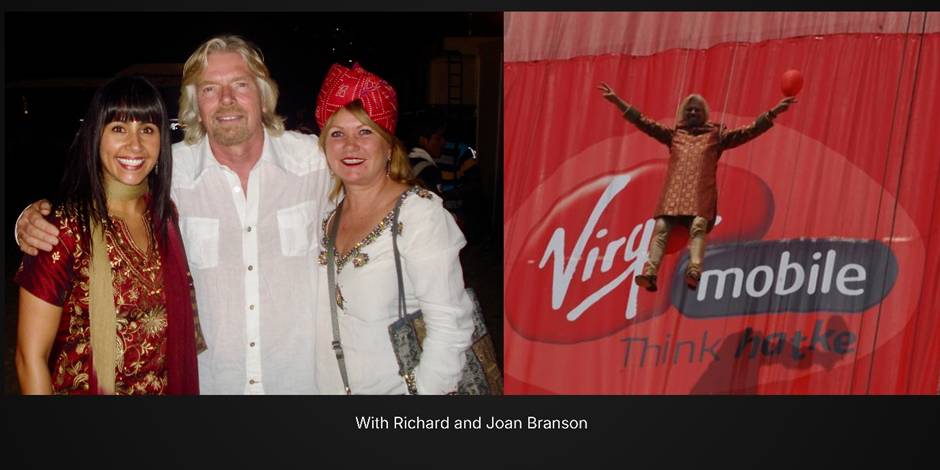
I had the privilege of meeting Richard Branson during the launch of Virgin Mobile India, where I was leading Communications and Culture for the joint venture, alongside supporting his visit. This is a photo from that day. It captures the moment, but not what I remember most.
What stayed with me
There were the expected parts – press calls, photos, a tightly managed schedule. But what stayed with me wasn’t any of that.
It was what happened in between.
He spent time with the call centre agents. The Customer Experience teams. People on the ground, on the frontline. That’s where his attention was. Not the formalities or the expected conversations, but the people closest to the customer.
He sat with them, asked about their lives, their families, what mattered to them. There was no script or sense of rushing through. You could feel something shift in the room as it happened.
Later that evening, he invited my parents, who were visiting at the time, to join him and his late wife, Joan, for dinner. It wasn’t planned or expected, and it’s still a memory my dad treasures today.
I’d spent time with Joan, driving around Mumbai, visiting the sites. We got to know each other in those in-between moments. She was warm, funny, and completely at ease. A genuinely kind and beautiful human being. I remember how natural it felt, more like spending time with a friend than anything formal. A connection built in those in-between moments. I was sorry to hear she had passed away late last year.
What I understood later
I’ve thought about that meeting many times since. Not the visible moments, but the ones in between – the parts that don’t make the schedule and aren’t designed to be seen.
Across different businesses and countries, Richard shows up in a consistent way. It also reflected something broader about how the Virgin Group was built: less hierarchy, more proximity. Closer to employees, closer to customers. You could see it in how time was spent, not just what was said.
It took time to understand why it mattered. Some things only make sense when you’ve seen enough to recognise them.
What’s changed
What I’ve come to notice since is how much those small moments carry.
Leadership today isn’t experienced in controlled settings; it’s picked up in fragments – in passing interactions, in tone, in how time is spent when there’s no expectation to perform.
This is what I refer to as Radical Visibility.
Visibility has increased, but what stands out is accessibility.
Who leaders spend time with.
Where they choose to be.
What they prioritise when they don’t have to.
Those moments travel. People talk about them, compare them, and decide what they mean in real time.
Leadership is no longer buffered by distance. It is seen more often, in more places, by more people – not just in formal settings, but in the ordinary ones.
What this points to
- Visibility alone isn’t what people remember
- Accessibility shapes how leadership is experienced
- Time spent signals what matters
- Behaviour between meetings carries weight
- Consistency across situations is noticed
Closing reflection
Looking back, that’s what I took from that day. Not a leadership model or a set of behaviours, but a quiet awareness that what happens in between the visible moments is often what people remember most.