
PRESSURE DOESN’T DEFINE LEADERSHIP. IT EXPOSES IT.
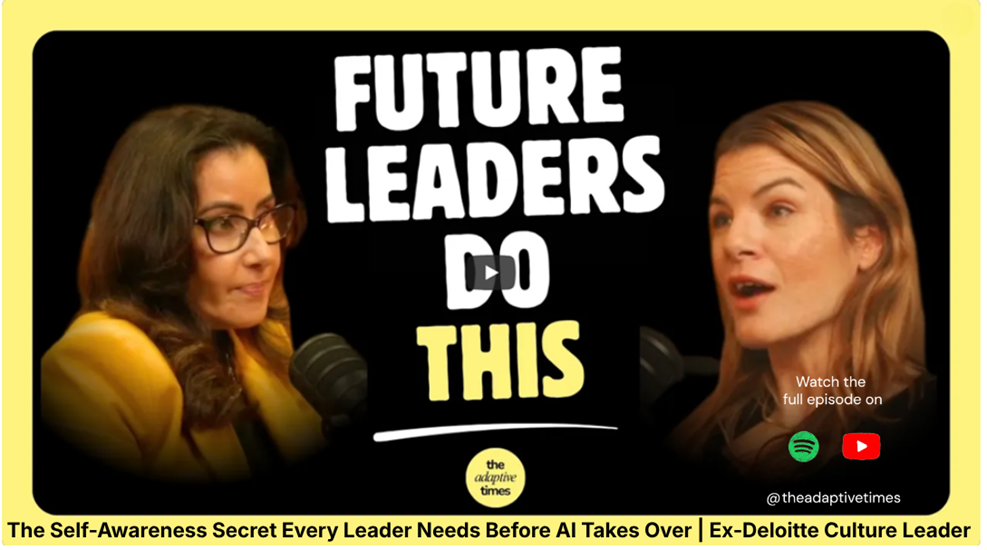
In conversation with former Google Marketing and Sales Leader Angeliki Galanopoulou on the Adaptive Times podcast, I explored how leadership behaviour under pressure affects whether people raise issues early, trust difficult decisions and understand what is expected of them during change.
That was the thread running through my conversation with Angeliki. We talked about trust, culture and adaptability, but particularly what people experience from leaders when the pressure rises.
What leadership behaviour under pressure reveals
Basra, 2004. Seven of us were sitting in a tent waiting for lunch. Mealtimes were one of the few parts of the day that felt normal.
Then came a whistle and a thud. The tent shook, but we carried on talking. The dull sound of explosions had become part of the background. Then a second impact landed closer with radios bursting to life with instructions to take hard cover.
Everyone scrambled. I grabbed my kit and, for reasons I still cannot explain, picked up a doughnut I had been eyeing up!
As we ran across the compound, incoming mortars continued. I hit the ground flat on my chest, somehow still holding the doughnut above me.
My comrade was ahead of me and had a choice. He could have kept running. Instead, he turned back, pulled me up by the scruff of my neck and we ran together to the safety of an ISO container. He probably saved my life.
Inside, there was that strange mix of adrenaline and silence until someone called out, “Jamesy got the doughnut.” Everyone laughed and later I broke it into pieces and we shared it.
What stayed with me was not the explosion. It was the choice he made to turn back for me.
How trust is earned, protected and rebuilt
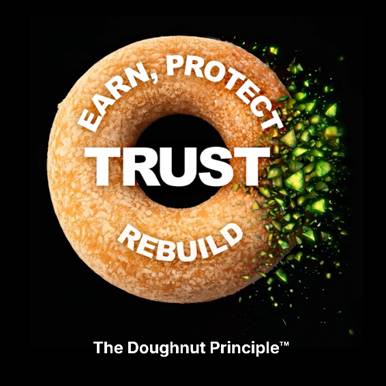
That moment became the foundation of The Doughnut Principle™ | The Trust Loop.
People experience trust through behaviour and it moves continuously through three stages.
- Earn: is what happens before the pressure arrives. People notice whether your behaviour matches what you say and whether they can rely on you.
- Protect: is what happens when things become difficult. People watch whether you remain present, communicate clearly and take responsibility for your decisions.
- Rebuild: matters when trust has been damaged. It requires ownership and evidence that behaviour has changed.
Leaders move through this loop all the time. One statement or one big gesture rarely determines trust. It’s shaped by what people repeatedly experience from you.
Where culture is actually set
We often try to define culture through values, messaging and internal campaigns. People experience it somewhere much more immediate.
They notice what happens when something is uncomfortable. Someone raises a concern and watches how the leader responds. A difficult issue sits in the room and nobody names it. A leader delivers a carefully prepared announcement and then disappears when the questions begin.
Those moments tell people what can be challenged, what gets avoided and how much honesty is safe.
Over time, those experiences become culture. The words may describe what an organisation wants to be. Behaviour tells people what it actually is.
Leadership is exposed under pressure
People don’t really care what you say. They are always watching what you do when things become difficult.
That is when people judge leadership.
If people do not feel safe or seen around you, you’re not leading. You are simply in charge.
Leadership shows up when things do not make sense and your team is asking questions you cannot fully answer.
In those moments, you have a choice. You can pass the message on, or you can manage upwards and ask the questions your team cannot ask for themselves.
When leaders don’t have the answers, “we are where we are” can easily become the fallback. But if nobody challenges upwards, people learn quickly that the difficult questions will not be asked.
That is when trust starts to erode. Issues stay below the surface for longer, and leaders make decisions without hearing what is really happening.
Empathy matters. What happens next matters more.
Listening well matters. Someone can leave a difficult conversation feeling very differently because they felt heard.
Empathy is a state. Compassion is a choice.
But leadership cannot stop there. If someone tells you the workload is unsustainable, what happens afterwards? If a team raises a concern about a decision, does anything change? If someone takes the risk of challenging you, what do they experience the next time they walk into the room?
Empathy creates connection. Trust is affected by what leaders do with what they have heard.
Adaptability without losing your judgement
We also talked about the expectation to bring your whole self to work. I think the reality is more nuanced.
Most of us adapt. We change how we communicate depending on the people around us, the environment and the situation. That can be useful.
The risk comes when adapting becomes performing. You start saying what the environment expects rather than what you believe needs to be said.
Leaders need enough self-awareness to adjust their approach without diluting their judgement. I have seen how easy it is to become very good at reading an organisation and, without noticing, start sanding the edges off what you really think.
What this looks like in practice
During the pandemic, Brian Chesky faced the difficult decision to make significant redundancies at Airbnb. He did not disappear behind a formal announcement. He stayed visible, explained the decision and used his network to support people who were leaving.
The decision itself was still difficult. What people could see was how he chose to lead through it.
How leadership behaviour under pressure is judged in real time
People increasingly experience leadership in the moment. They see the decision, experience how it is communicated and notice whether the leader remains visible afterwards.
That is why leadership behaviour under pressure matters. It removes some of the control they have over how they want to be perceived. What remains is their behaviour.
My comrade had a choice that day in Basra: keep running or turn back.
Most leadership choices are nowhere near as dramatic. But people still notice the moment a leader speaks up, stays silent, steps in or walks past.
Those choices accumulate. Eventually, they become what people believe about you.
Key takeaways
- Leaders build trust through behaviour, not intention.
- Leaders shape culture through what they tolerate and respond to.
- Pressure exposes how leaders actually behave.
- Empathy matters, but what happens next builds trust.
- Adaptability works best when judgement and values stay intact.
You can also explore how I bring this thinking into my Leadership Under Pressure Keynote