
Leadership Under Pressure: General Sir Mike Jackson and the Judgement Behind a Defining Decision
I had no idea who he was.
Before my deployment to Iraq, while I was working at The Spectator, Boris Johnson invited me to join him for lunch with a small group.
I remember the man opposite me more than the conversation. Gravelly voice. Dry humour. Eyes that looked straight at you when he spoke.
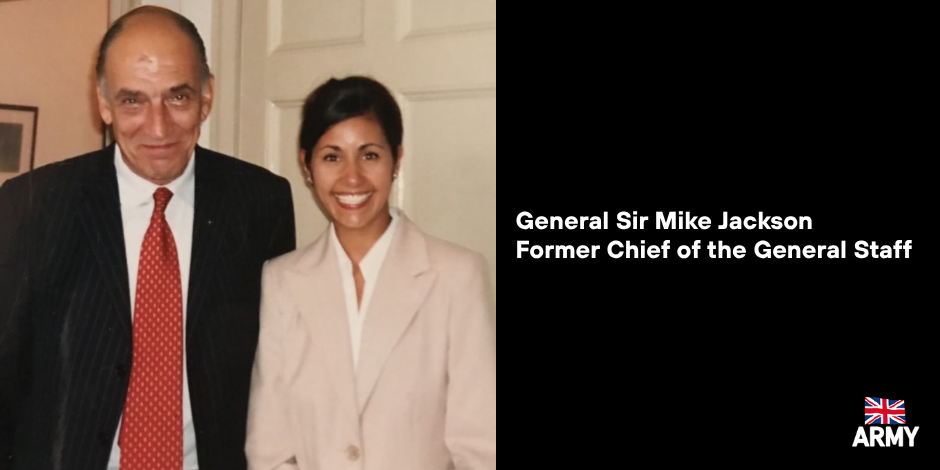
Only afterwards did I realise I had been sitting with General Sir Mike Jackson, then Chief of the General Staff of the British Army.
At the time, it was just a lunch. It was only later, after Iraq and after reading more about the decisions that defined his military leadership, that I understood that encounter differently and what his record revealed about leadership under pressure.
Leadership under pressure requires judgement
General Sir Mike Jackson is often remembered for a decision during the Kosovo War, when he was ordered to block the runway and isolate Russian forces. He refused, responding: I’m not going to start World War Three for you.
The line became famous, but the context matters more to me: the pressure, the visibility and the consequences attached to the decision. There was no performance in how the decision was made. Just judgement, applied at a point where the decision could not be passed on.
That is what leadership under pressure can demand.
Some decisions cannot be deferred
Some decisions arrive without enough time, information or certainty. You still have to decide.
You don’t always recognise the significance of those moments at the time. Sometimes they only make sense when you have experienced pressure yourself.
My understanding changed after Iraq. I had seen how quickly circumstances could shift and how much people relied on the judgement and behaviour of those around them when there was no perfect answer.
Pressure leaves less space for ego. People see whether you take responsibility, ask the difficult question or retreat behind someone else’s decision. Judgement becomes visible.
Leadership is now judged in real time
Leadership is often described in calm conditions, but it’s rarely experienced that way.
People experience leadership when pressure is present, time is limited and decisions have consequences.
I call this environment Radical Visibility.
What once stayed inside the room now travels. Decisions are shared and interpreted in real time. People watch what leaders decide, but they also notice how the decision is made, how it’s explained and whether the leader remains visible afterwards.
Leadership behaviour no longer stays neatly contained inside a meeting or inside a script.
What people remember when pressure rises
Most leadership decisions are not as dramatic as the one Mike Jackson faced.
They may be a difficult call in a meeting, a challenge from someone more senior or more junior, or a decision affecting people who are not in the room.
But those moments still reveal something.
Does the leader hold their judgement? Do they ask the question others are avoiding? Do they own the decision when the consequences become uncomfortable?
That is where trust and respect are shaped.
Key takeaways
- Leadership under pressure depends on judgement, not title.
- People notice how leaders make difficult decisions.
- Radical Visibility means behaviour is interpreted in real time.
- Trust grows when leaders own the decisions they make.
You can also explore how I bring this thinking into my Leadership Under Pressure Keynote.
Closing reflection
Looking back, it was the decision itself that stood out. It was made with conviction, in full view of the consequences.
Leadership is not always defined in the moments we plan for. It is often defined in the ones we don’t.