
Inclusion Has Commercial Value – but Only When It Shows Up in Culture
Inclusion is often talked about as a principle, but in practice it shows up in something much simpler: how people are treated, who gets heard, and what leaders choose to notice.
Where the gap shows up
When inclusion is embedded in culture, it affects retention, decision-making, trust, and execution. When it sits at policy level, the gap shows up elsewhere. You see it in silence, in turnover, and in decisions that are not challenged early enough.
The commercial case
There is a clear commercial case. Research from McKinsey & Company continues to show a link between diversity in leadership and stronger financial performance. Companies in the top quartile for gender and ethnic diversity are more likely to outperform their peers. The important point is not diversity as a headline, but whether the environment allows people to contribute fully.
The Institute of Directors makes a similar point from a leadership perspective. Inclusive cultures, led from the top, are linked to stronger performance, wellbeing, and lower absence. That matters because inclusion is not tested in what is written down; it is tested in how the organisation behaves when pressure hits and decisions can’t be delayed.
It’s not a pipeline issue. It’s a system issue.
The business case for gender diversity at the top is well established. Organisations with more balanced leadership are more likely to see stronger business outcomes. Yet progress at senior levels remains slow. Representation in executive teams has moved, but not at the pace the evidence would suggest.
This is often framed as a pipeline problem. It isn’t.
It’s a system issue.
The expectations attached to senior roles, the assumptions made in hiring and promotion, and the way decisions are made all shape who progresses. Bias does not always show up loudly. It shows up in patterns.
Efforts like awareness, mentoring, and allyship matter, but on their own they rarely shift outcomes in a meaningful way.
In many organisations, inclusion is described as being “baked into the strategy.” But that statement is rarely tested. It signals intent more than impact. Over time, action is replaced with language. KPIs become a reporting exercise, and the focus shifts to how things look rather than what actually changes.
A simple test is this: if inclusion were removed, would anything break? If the answer is no, then it was never built into the system. It was part of the vocabulary.
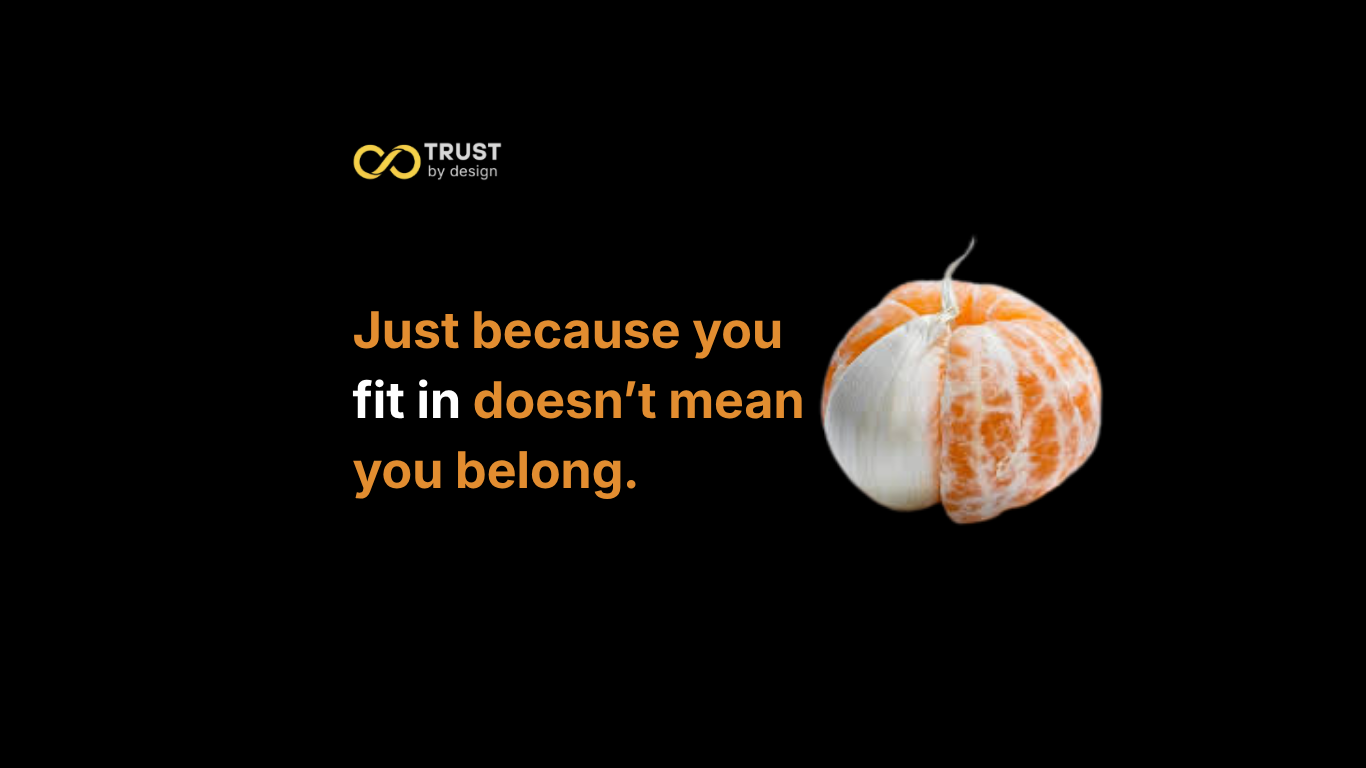
Diversity can be measured. Inclusion is experienced. Being in the room is one thing. Feeling able to contribute is another.
The question becomes more direct.
- Are we willing to change how decisions are made?
- And will we hold each other accountable for doing it?
Where the return shows up
The return on inclusion is not abstract. It shows up in outcomes leaders already recognise.
- Retention improves when people feel respected and able to progress
- Productivity improves when people are not managing exclusion
- Problems are surfaced earlier
- Reputation reflects the reality of the culture
Research from McLean & Company on belonging adds another layer. Organisations increasing investment in belonging are more likely to rate revenue growth highly. That does not prove causation on its own, but it reinforces a pattern: culture affects performance, and belonging is part of that system.
Where leadership is tested
This is where leadership comes into it. Inclusion is not evaluated in statements. It is evaluated in real time through behaviour.
This is what I mean by Radical Visibility.
People can see who gets interrupted, who gets promoted, who gets heard, and who gets protected.
A practical lens
If you want to look at inclusion through a commercial lens, the signals are already there.
- Lower attrition reduces cost
- Stronger engagement improves output
- Speak-up cultures reduce hidden risk
- Trust supports performance under pressure
Closing reflection
The pressure on leaders has changed. People are no longer looking for statements. They are watching behaviour.
In a visible organisation, culture is no longer what the organisation says it is. It is what people experience every day.